
Bioenergetic Analysis is a form of psychotherapy that combines analysis, active work with the body, and relational therapeutic work. The approach is grounded in an understanding of the importance of the body – and the energy that underlies both body and mind – to psychological development and emotional health. A basic tenet of Bioenergetics is that the person is his or her body, and all life experience is ultimately body experience. The body’s expressions, posture, flexibility and motility, energetic integrity (or fragmentation, blocks and splits), and patterns of muscular holding tell a story of a person’s emotional history. They also reveal the limitations and strengths of the personality and reflect the person’s characteristic way of being in the world. Bioenergetics is rooted in a psychodynamic and body-oriented theory of development. It also incorporates attachment theory, trauma theory and psychoneurobiology. The goal of Bioenergetic therapy is more than the absence of symptoms – it is to have greater “aliveness”, pleasure, joy, love and vibrant health.

Bioenergetic therapists are trained to read the expression of a person’s body, resonate with their energy, feel their emotions, as well as listen to the words. The language of the body (posture, breathing, movement and expression) is kept in focus as an indicator of where a person stands on the way to a fuller sense of self – from the limitations of the past, to the fullness and/or freedom of the present and future. Bioenergetic techniques are incorporated to help a person get in touch with feeling, enhance self-perception, or develop greater self-expression or self-control.
In Bioenergetic Analysis, the therapeutic relationship provides a place of safety for healing to begin. Clients are helped to release chronic muscular tensions, manage emotions/feelings, expand the capacity for intimacy, heal sexual difficulties, tap and own autonomy and strength, and learn new, more fulfilling ways of relating to others. Tenderness, aggression and assertion – and their confluence in sexuality – are seen as core lifesaving forces.
Bioenergetic therapists are non-judgemental, “present” and interactive when working with clients. While each brings his or her own style of Bioenergetics to the work, they all move from a basic and empathic understanding of the body, mind and energy. Understanding the bodily and energetic nature of feeling allows Bioenergetic therapists to work with sensitivity and respect for the client’s boundaries and needs, even while working with powerful emotions.
Bioenergetic Analysis is helpful with all kinds of issues, from minor relationship problems to anxiety, depression and trauma. Change, growth and self-acceptance are all facilitated by including the energetic and bodily structure of the person in the therapy process.
Children learn to manage their energy and feelings very early in life by holding their breath, and cutting off feeling and awareness of areas of the body (and self) using muscular tension. When the early emotional life experience is difficult (as it is for many) the defensive holding and tension become part of the personality and are built into the form of the body as chronic muscular tensions that persist into adulthood. The tensions operate below the level of awareness and rob the person of a full, vital experience of life. The nature of the tensions varies and depends on how and when they developed, and the feeling that is being repressed.
The defensive holding is tied to the emotional history, and while it once helped a child, it exacts a price later in life. Tensions can fragment the sense of self, forestall emotional growth, reduce energy creating the conditions for depression and fatigue, limit breathing fueling the potential for anxiety and panic, or interfere with the ability to simultaneously experience sexual and love feelings. The holding can lead to an emotional “deadness” or a “thin-skinned” over-responsiveness. In general, the tensions and holding patterns keep a person out of contact with the energetic and feeling source of the self in the body, and predispose the person to limited, dysfunctional patterns of feeling, thinking and behaving.
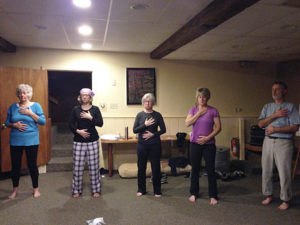
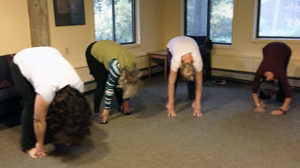
In addition to analysis of history, dreams, etc., and therapeutic work within the therapeutic relationship, Bioenergetics utilizes movement, breathing, stress positions and self-expressive exercises to work with the holding patterns in the body. This allows a client to access, begin to understand and then integrate the previously repressed and unconscious feelings (and accompanying vitality) into the mature adult self. Bioenergetic Analysis brings a unique and sophisticated understanding of the mind, body and core energies to bear in the process.
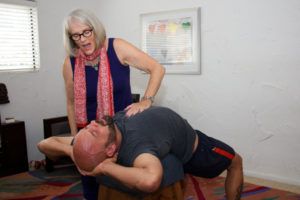
Examples of techniques include: appropriate, supportive body contact (such as holding the client’s head while the client stretches backward over a bench), expressive exercises that build the sense of self and release muscular holding (such as kicking on a mattress to access strength and release muscular holding), and “grounding” (an exercise that induces feeling through stretching, vibration and breathing to build or contain strong feeling in the body).
There are many ways of working with the body, and techniques can be powerful or gentle depending on the need. The body work helps to open feeling, and this deepens the analytic work. In turn, the analytic work opens the way for body work to integrate gains at the levels of body and energy. Both body work and analysis take place in the context of a growing, evolving relationship between client and therapist, which supports and adds to the opportunity to own and feel more of the self. Bioenergetic therapists incorporate the best of today’s psychoanalytic and relational approaches in this regard.
Bioenergetic Analysis was developed by Alexander Lowen, M.D. as a significant modification and extension of the character analytic techniques of Wilhelm Reich, M.D., a student of Sigmund Freud.
Lowen has written many books on Bioenergetics, including but not limited to: The Language of the Body, Betrayal of the Body, Fear of Life, Spirituality and the Body, Narcissism: The Denial of the True Self and Joy. He has also written numerous monographs about the body and energy in physical and emotional health.
LOWEN DESCRIBES BIOENERGETICS:
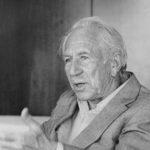 |
“It integrates work with the body, with the patient’s interpersonal relationships, and with his mental processes; each of which is correlated and interpreted in terms of the others… Bioenergetic Analysis starts with the reality of the body and its basic functions of motility and expression.” |

© 2024 nanziba.com, All rights reserved.